



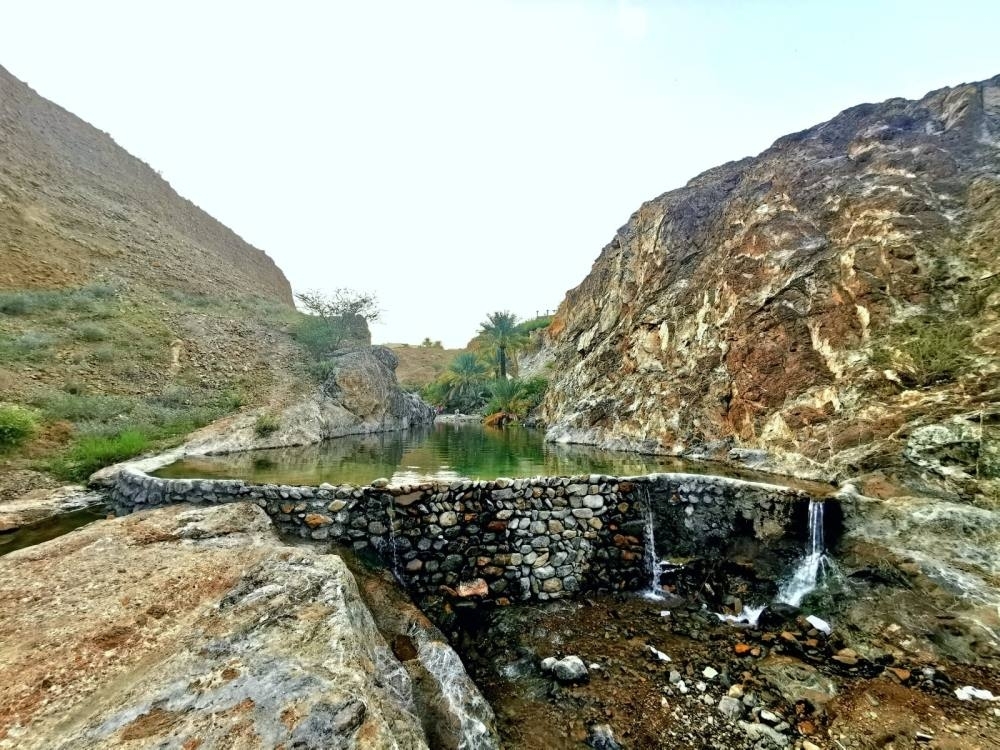
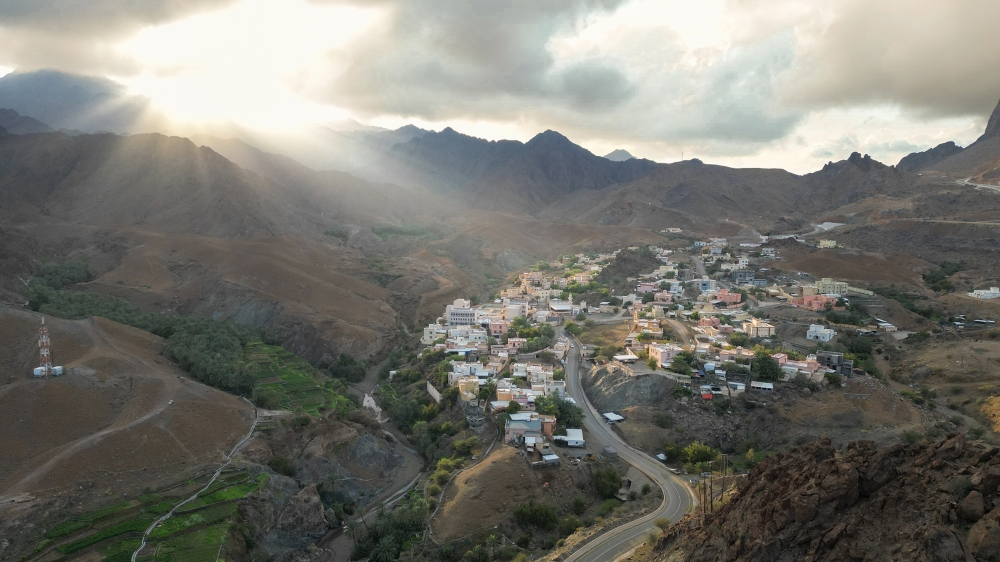





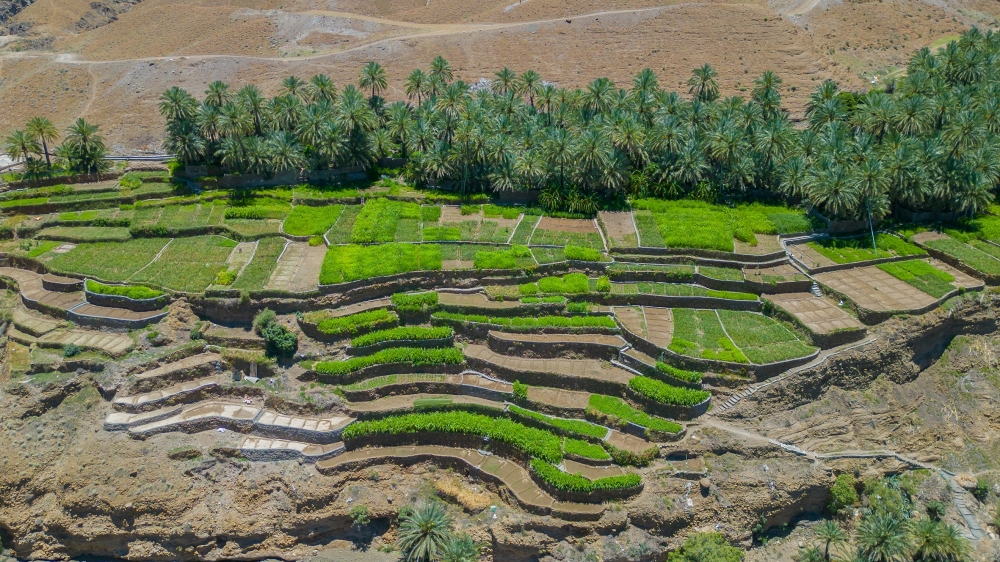
Al-Khad Village, located in in Sohar, North Al Batinah Governorate, is a popular summer destination for many visitors due to its moderate summer climate, historical and cultural landmarks, and diverse agricultural crops cultivated on beautiful terraces are key features.
Among the most prominent crops are dates, citrus fruits, mangoes, grapes, wheat, barley, garlic, onions, and other agricultural products. These crops are irrigated by numerous aflaj (traditional irrigation channels) and springs, including Falaj al Suwaidi, Falaj al Dhahir, Falaj al Bilad, Falaj Hayl al Ajmah, Falaj Hayl al Rawashid, Falaj al Manzafah, Falaj al Khatwah, Falaj al Dahiyah, Falaj Huwayl al Khadhri, Falaj al Basus, Falaj Al-Waqan, Falaj al Malha, Falaj al Khubayn, Falaj Hayl al Zam, and Falaj al Huwayl. These aflaj are considered to be Ghayliyah (water-fed) aflaj.
The village's blend of mountainous terrain, scenic landscapes, and farms makes it a favorite destination for nature lovers, photographers, and hikers along its many ancient trails.
The villagers also practice various professions, including handicrafts such as walking stick making, cattle and sheep breeding, and beekeeping, which provide a secondary source of income.
Al Ajmi said that the Heritage and Tourism Department in North Al Batinah Governorate is working on evaluating hiking trails in preparation for their official approval and launch.
This will be followed by promotion through official platforms. He noted that there are several trails in the village suitable for hiking enthusiasts, including: the trail from Al-Gharbi Mosque (Al-Fariq Mosque) down to Wadi al Khubain, up to Wadi al Malha Dam, then turning towards Qabil al Bilad and continuing to Al-Khad Sports Club's field before returning to the starting point via Sha'bat Qura (approximately 10-12 kilometers); a trail from the Public Council through Sha'bat Qura and Sayh al Salam to Wadi al Lajam, reaching Katam village and returning along the same route (approximately 7 kilometers); and a trail from the Public Council towards Al-Manzafa Castle, ascending the hills to Jabal al Ahwar al Sharqi, reaching the Al-Ala'im (stone towers), then descending to Rahbat al Khais, and then to Al-Lajam via Katam village, returning via Wadi Al-Lajam.
The starting point (estimated to be between 10-13 kilometers) is a route from the village center through Wadi al Khubain, then up one of the valleys to cross and return via Wadi al Malha, passing by the Wadi Al-Malha Dam, and from there back to the starting point (a distance of 10 kilometers).
This aims to cultivate a culture of creating tourism products that provide job opportunities for local residents and support the heritage and tourism sector. It also encourages attracting mountain hiking enthusiasts from various governorates to explore the mountain villages, gorges, agricultural terraces, and historical sites.
Oman Observer is now on the WhatsApp channel. Click here


